






SHOTOKAN KARATE

What is Karate
Karate is a martial art originating from Japan and introduced into the UK in the 1950’s. The sport side has national and international competitions and British Karate has excelled in these over the years. Since 1999, Karate has been accepted by English Educational Boards as an activity in PE qualifications at GCSE and A level.
Kihon, Kata and Kumite
Karate training is usually divided into three areas known as the three K’s (Kihon, Kata and Kumite). There are different styles of Karate but they all follow these basic principles.
- Kihon is the study of the basic moves required to perform the art.
- Kata means 'form' and is a set of principles underpinning movements and techniques, represented as a fixed sequence of moves against imagined opponents.
- Kumite means 'sparring' and develops from well-
defined kata to open sparring.
The Benefits of Karate
If you’re looking for something that fits your lifestyle and health aspirations, we recommend karate
- Your instructor will start at your starting point and will help you to achieve your personal targets. You can have two left feet and still make great progress!
- You can go on and take part in local and national competitions
- Your social life will improve if you get involved with a club or go on to competitions
- You can do karate for life, as there really is no age limit
- Karate is enjoyable; although it is a discipline, it is not a penalty!
- Karate can strengthen your character and increase your self confidence
- Karate helps with non-
violence and generates respect and responsibility within the community
Main Features of Karate
- Karate is safe. It teaches you self-
defence and self- discipline. - Karate is practiced by people of all ages and abilities. It is not unusual to see parents and children enjoying training together at our dojo.
- Karate is an individual activity, even team events are decided on the outcome of individual bouts. You can start at any point as everyone is assessed individual and objectively for progress against a syllabus. This allows people of all abilities who put in the required effort to attain black belt status.
- Men and women, people with disabilities and people of all ages can train together safely.





DAN GRADING
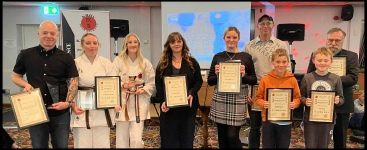
Many congratulations to Kirsty Irving and Rosie Dickinson on achieving Shodan and to Angela Crowther for achieving Nidan on Saturday 29 June 2024.
